
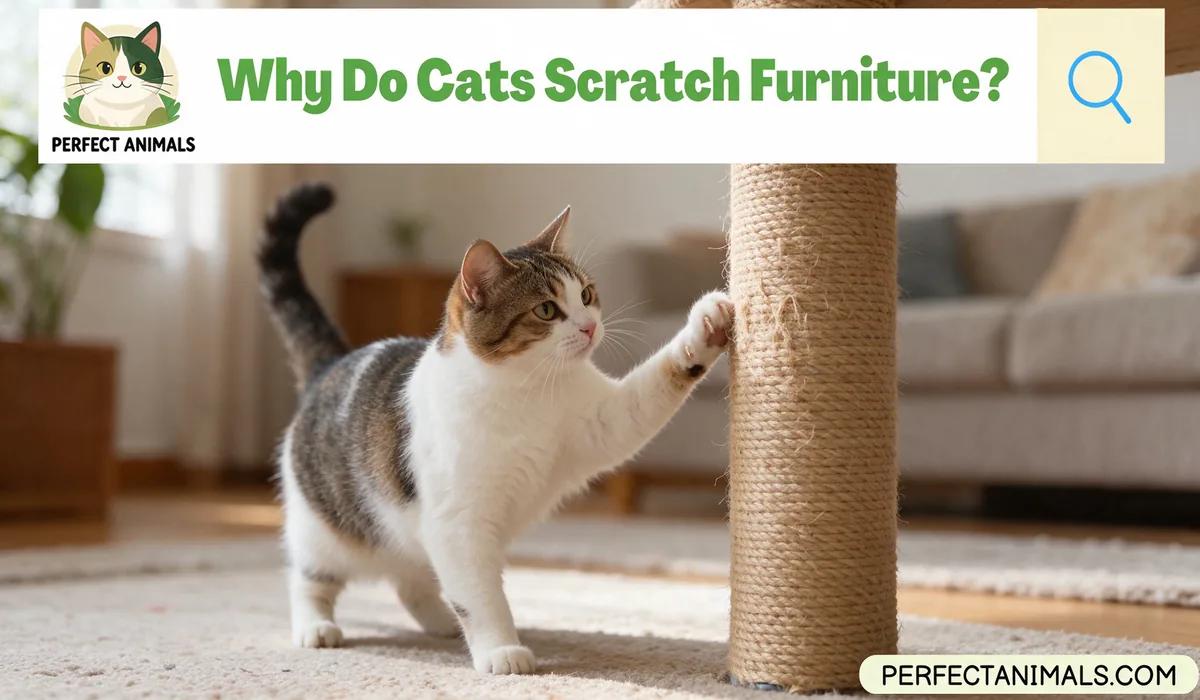
Why Do Cats Scratch Furniture? What It Means and How to Redirect It
If you have ever found fresh claw marks on the sofa, you may have asked, “Why do cats scratch furniture?” The short answer is that scratching is normal feline behavior. Cats scratch to mark their space, maintain their claws, stretch their bodies, and communicate. Your couch may simply be in the wrong place at the wrong time.
That does not mean you have to accept shredded furniture. The most effective approach is usually redirection: understand what your cat likes about the furniture, then provide a scratching option that is easier and more rewarding to use.
Why do cats scratch furniture?
Scratching serves several purposes at once. The visible marks tell other cats that a cat has been there, while scent from glands in the paw pads adds another layer of territorial communication. Scratching also helps remove the loose outer sheath from the claws and gives a cat a satisfying full-body stretch.
For some cats, scratching is also part of social communication or an emotional routine. A cat may scratch after waking up, near a favorite resting place, or in a central room where family members spend time. VCA Animal Hospitals describes this as normal behavior rather than revenge or deliberate misbehavior.
Why does my cat choose the couch?
Furniture often offers exactly what a cat wants: a stable surface, a familiar texture, a prominent location, and enough height for a long stretch. A sofa corner may also carry household smells and previous scratch marks. Once a cat has used a spot successfully, the remaining visual and scent signals can make that location attractive again.
Instead of asking your cat to stop scratching altogether, look for the details of the preferred target. Does your cat scratch vertically or horizontally? Does the surface feel like carpet, upholstery, wood, or rough rope? Does scratching happen beside a sleeping area or near a doorway? These clues can help you choose a better alternative.
How to redirect a cat from furniture
1. Match the scratching post to the cat’s preference
Start with the orientation and texture your cat already prefers. A cat that reaches up on a sofa arm may want a tall, vertical post. A cat that scratches a rug may prefer a horizontal cardboard scratcher or a low mat. Some cats like sisal, while others prefer cardboard, wood, or a carpet-like surface.
The post should be sturdy enough that it does not wobble or fall when your cat leans into it. For vertical scratching, it should be tall enough for your cat to stretch with the front legs extended. A post that moves or is too short can teach a cat that the new option is unsatisfying.
2. Put the scratcher beside the damaged furniture
Location matters. Place the new scratcher directly beside the couch corner, chair leg, or other target your cat already uses. Cornell’s feline behavior guidance recommends matching the scratcher to the cat’s preferred material and orientation, then placing it near the existing target. Once your cat uses it reliably, you can move it a little at a time.
If your cat scratches in several rooms, provide more than one approved location. A single post hidden in a quiet corner may be less appealing than several scratchers near sleeping places, family activity, or previously scratched surfaces.
3. Make the approved area rewarding
Praise your cat calmly when they use the scratcher. You can place a favorite toy nearby, play around the post, or use a small treat to make the area more interesting. Some cats respond to catnip, although not every cat does.
Avoid grabbing your cat’s paws and forcing them to scratch. Let the cat discover the surface voluntarily. The goal is to make the approved option familiar and rewarding, not stressful.
4. Protect the furniture temporarily
While your cat is learning, make the old target less convenient. Cover a sofa corner with a throw, furniture protector, or another safe barrier. Double-sided tape on a removable protective surface may discourage some cats because they dislike the sticky feel. Keep the approved scratcher directly beside the protected area so the alternative is obvious.
Do not use frightening traps, loud punishment, or physical correction. Cornell notes that punishment can make a cat fearful and may teach the cat to avoid scratching only when the owner is present. It does not explain what the cat should do instead.
Could stress make a cat scratch more?
Possibly. Scratching can be a reassuring marking activity, and VCA notes that anxious or fearful cats may scratch more often. A move, a new pet, unfamiliar people, changes in routine, or conflict between cats may affect behavior.
Do not assume stress is the cause just because scratching increased. First check the cat’s environment and claws, then discuss persistent or sudden behavior changes with a veterinarian. A veterinary behaviorist can help when the problem continues despite thoughtful environmental changes.
Can trimming claws reduce furniture damage?
Regular nail trims can reduce the damage caused by scratching, but they do not remove the need to scratch. Only trim the sharp tip and stop if your cat becomes distressed. If you are not comfortable handling the paws, ask your veterinarian or a qualified groomer for help.
Nail caps are another option for some indoor cats that tolerate paw handling. They should be applied and replaced according to product directions, and the cat’s paws should be monitored for discomfort. These measures reduce damage; they are not substitutes for providing appropriate scratchers.
When should you ask a veterinarian for help?
Talk with your veterinarian if scratching changes suddenly, becomes intense, occurs with other unusual behavior, or is accompanied by signs of pain, skin problems, or anxiety. Professional guidance is also useful if several cats are fighting over territory or if you have tried multiple appropriate scratchers without success.
Never declaw a cat as a routine solution. Declawing is an amputation of the ends of the toe bones, not simply a nail trim, and Cornell describes it as a controversial elective procedure with potential risks. Humane environmental management and veterinary behavior support should come first.
The bottom line
Why do cats scratch furniture? They are usually meeting normal feline needs for marking, stretching, claw maintenance, and communication. The practical solution is to move the behavior rather than punish it: match the texture and orientation your cat prefers, place a sturdy scratcher beside the furniture, reward appropriate use, and protect the old target while the new habit develops.
For more explanations of everyday cat behavior, read why cats knead blankets, why cats chirp at birds, and what a cat’s slow blink can mean. For the veterinary behavior guidance behind this article, see Cornell Feline Health Center, VCA Animal Hospitals, and the Oregon Veterinary Medical Association.

John Maloney, a passionate bird enthusiast since his childhood, has cultivated expertise in bird care and habitat conservation. Holding an MS in Wildlife Biology from the University of Florida, John has conducted significant research on endangered bird species and their ecosystems.