
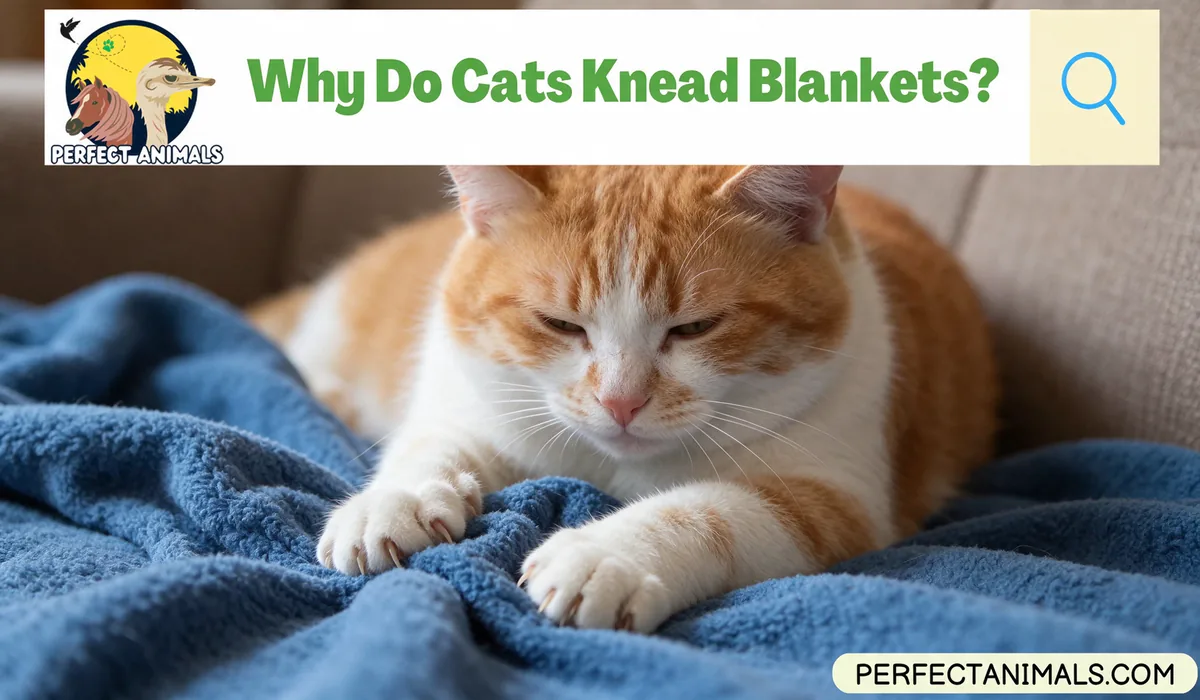
Why Do Cats Knead Blankets? 7 Reasons Behind “Making Biscuits”
If your cat rhythmically pushes its front paws into a blanket, your lap, or the couch, you may wonder what the behavior means. Why do cats knead blankets? In most cases, kneading is a normal comfort behavior that begins in kittenhood and continues into adulthood. Cats may knead when they feel relaxed, prepare a resting place, show affection, or leave their scent.
Most kneading is harmless, but a sudden change in frequency or location can be worth noticing. A cat that kneads much more than usual, hides, eats less, or seems painful may be trying to soothe stress or discomfort. The safest interpretation comes from looking at the whole pattern rather than treating every “making biscuits” episode as exactly the same.
Why do cats knead blankets?
Cats knead blankets because soft fabric can provide a comfortable surface for an instinctive behavior. A cat may press one paw and then the other in an alternating rhythm, sometimes purring or settling down afterward. Veterinary sources describe several overlapping reasons: kitten nursing memories, relaxation, preparing a bed, scent marking, affection, and stretching.
There is not one proven explanation for every cat. Your cat may knead a blanket for one reason today and a different reason tomorrow. The setting, body language, and what happens next provide useful clues.
1. Kneading begins with nursing behavior
Kittens knead their mother’s abdomen while nursing. The paw motion helps stimulate milk flow, so it becomes connected with warmth, nourishment, and close contact. Many cats carry a version of this behavior into adulthood even though they no longer need it to nurse.
That early association helps explain why adult cats often knead soft blankets, fleece beds, or a person’s lap. The texture and rhythmic movement may be familiar and reassuring. Adult kneading does not mean your cat is confused or immature; it is a normal behavior that can persist after kittenhood.
2. Kneading can help a cat relax
Many cats knead when they are comfortable and preparing to rest. You may see your cat climb onto a blanket, knead for a few seconds or several minutes, then curl up for a nap. The behavior may be part of a predictable settling routine, especially in a quiet place where the cat already feels secure.
Some cats also knead when they are mildly stressed. Repetitive, familiar actions can help an animal regulate its emotions, so kneading may be self-soothing rather than a simple sign of happiness. Look at the cat’s face, posture, appetite, and willingness to interact. A relaxed cat usually has a loose body and normal behavior before and after kneading.
3. Your cat may be making a comfortable bed
Wild felids have been observed pressing down vegetation or bedding before resting. Domestic cats may retain a similar preparation behavior, even when a soft commercial bed is already available. Kneading can flatten or arrange a blanket under the body before the cat settles in.
This is one reason a cat may knead a blanket more often than a hard floor. The fabric responds to the paws and can be moved into a preferred shape. If your cat kneads and then lies down, the behavior is probably part of getting comfortable.
4. Kneading may show affection and trust
A cat that kneads your lap may feel safe close to you. Kittens knead while in close contact with their mothers, and some adult cats repeat the motion with people or animals they trust. Purring, relaxed eyes, a soft posture, and choosing to remain near you can support the idea that the moment is social and comfortable.
Still, kneading is not a precise translation of “I love you.” Cats may knead a blanket when no person is present, and a cat can enjoy your company without kneading. It is better to describe the behavior as a sign that your cat may feel secure in that situation.
5. Paw scent glands can mark the blanket
Cats have scent glands in and around their paw pads. When a cat kneads a blanket, bed, or person, it may deposit scent on that surface. This can help make a resting area feel familiar and may communicate that the space is part of the cat’s territory.
Scent marking does not automatically mean your cat is being possessive or aggressive. It is a normal part of feline communication. A cat may mark several favorite places, particularly areas where it naps or spends time with its family.
6. Kneading can stretch the paws and legs
The alternating push of kneading moves the toes, paws, wrists, and forelimbs. Some cats may use the motion as a gentle stretch before resting or after waking. This may be one small function of the behavior, although it does not explain every episode.
Pay attention if your cat appears stiff, avoids jumping, limps, or reacts when a leg or paw is touched. Kneading itself is not a test for arthritis or another condition. Changes in movement or signs of pain deserve a veterinary assessment.
Why does my cat knead me instead of a blanket?
Your lap is warm, soft, and associated with your scent, so it can be an appealing kneading surface. Your cat may be settling down, seeking contact, expressing comfort, or marking you with paw scent. Some cats knead a person before sleeping, while others do it during petting.
If the claws hurt, place a thick blanket between your skin and the cat’s paws. Avoid pushing the cat away harshly or punishing it. Redirect the paws gently and reward the cat for using an acceptable blanket or bed. Keeping the cat’s nails trimmed can also reduce accidental scratches, but do not cut into the pink quick.
Why does my cat knead and bite a blanket?
Some cats knead while suckling, licking, or gently biting fabric. The combination may resemble nursing-related comfort behavior. It can be harmless when the cat is only mouthing the material, but fabric ingestion can cause a dangerous intestinal blockage.
Do not leave a blanket with loose threads, holes, fringe, or pieces that your cat can swallow. Supervise a cat that chews fabric and offer a safe alternative. Contact your veterinarian if you know your cat swallowed cloth, thread, or another non-food item, or if vomiting, loss of appetite, lethargy, abdominal pain, or difficulty passing stool develops.
When is kneading unusual or concerning?
Normal kneading is usually occasional or part of a familiar routine. A sudden increase, a sudden decrease, or kneading in unusual hidden locations may be a clue that something changed. The American Animal Hospital Association and VCA recommend considering stress, pain, and other behavior changes when kneading is excessive or noticeably different.
Contact your veterinarian if kneading is accompanied by hiding, reduced appetite, changes in litter-box habits, weight loss, unusual vocalizing, aggression, limping, sensitivity to touch, or difficulty getting comfortable. Cats often conceal illness, so a marked behavior change is worth taking seriously even when the cat still purrs.
Do not try to diagnose pain from kneading alone. A cat may knead when content, anxious, or uncomfortable. A veterinarian can evaluate the full history and physical signs, and can help identify environmental stressors or compulsive behavior when appropriate.
How can you redirect painful or destructive kneading?
Start with a designated kneading blanket. Choose a thick, washable fabric without loose threads and place it where your cat already likes to rest. When the cat starts kneading furniture or your skin, guide its attention toward the blanket with a calm voice, a toy, or a treat. Reward the cat for using the preferred surface.
Keep several scratching posts and resting areas available. Trim nails regularly if your cat tolerates it, and ask a veterinary professional to demonstrate the process if you are unsure. Never declaw a cat to stop kneading. If furniture damage continues or the behavior is paired with anxiety, ask your veterinarian about a broader behavior plan.
Is kneading the same as scratching?
No. Kneading is an alternating pressing motion, often on a soft surface, while scratching usually involves pulling the claws down or across a surface. Cats can do both for different reasons. Scratching helps maintain the claws, stretch the body, and communicate through visual marks and scent from the paw pads.
Providing appropriate scratching surfaces can reduce damage without trying to eliminate normal kneading. Understanding one behavior can also help you avoid confusing it with other animal signals. For example, rabbits thump their feet as an alarm or strong reaction, while deer stare while assessing an unfamiliar presence. Context matters for cats, too.
Bottom line: why do cats knead blankets?
Cats knead blankets because the behavior can be comforting, familiar, and useful. It may recall nursing, help arrange a resting place, show trust, leave scent, or provide a gentle stretch. Most of the time, a relaxed cat kneading a soft blanket is doing something normal.
Protect your skin and furniture with a thick designated blanket, regular nail care, and gentle redirection. If kneading suddenly becomes intense or is accompanied by hiding, appetite changes, pain, or other unusual behavior, arrange a veterinary check rather than assuming it is simply a quirky habit.
Sources: VCA Animal Hospitals: Why do cats knead?, American Animal Hospital Association: Why Do Cats Knead?, and PetMD: Why Do Cats Knead?

John Maloney, a passionate bird enthusiast since his childhood, has cultivated expertise in bird care and habitat conservation. Holding an MS in Wildlife Biology from the University of Florida, John has conducted significant research on endangered bird species and their ecosystems.