Why Do Deer Stare At You? The Real Meaning of a Deer Stare
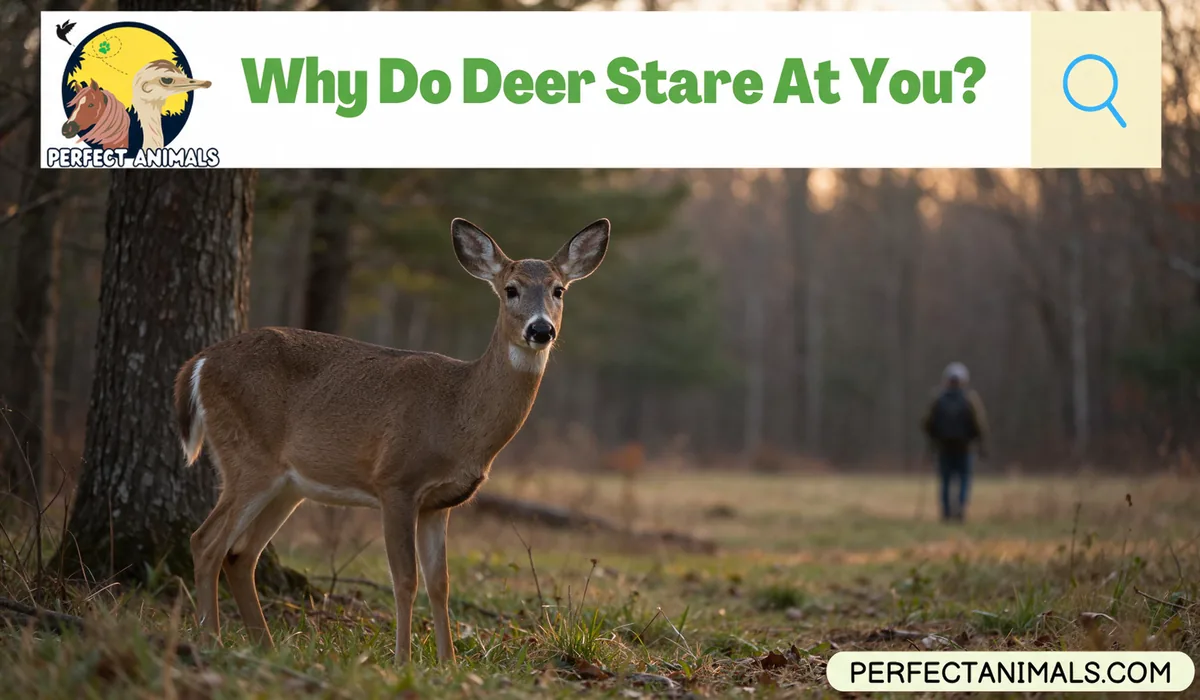
Why do deer stare at you? A deer that suddenly stops and looks in your direction is usually trying to gather information. It may have noticed movement, heard a sound, caught your scent, or simply be deciding whether you are a threat. The stare is not a secret message and it does not necessarily mean the deer is angry.
White-tailed deer are widespread across the United States, and people often see them in backyards, parks, roadsides, and forest edges. Their stillness can feel strangely intense, especially when the animal is standing only a short distance away. Here is what a deer may be doing when it watches you and how to respond safely.
Why do deer stare at people?
Deer stare because they are assessing an unfamiliar situation. A human walking through a familiar area changes the animal’s surroundings, so the deer pauses to collect more information before choosing what to do next.
The deer may be checking your direction, speed, posture, and distance. It may also be listening for footsteps, watching other people or dogs nearby, and using its sense of smell. A deer often looks still even though its ears, nose, eyes, and body are actively gathering information.
In many cases, the animal is deciding among a few basic options: continue feeding, move away slowly, run, or wait until the possible danger passes. Staring gives the deer a moment to make that decision without immediately spending energy on a flight response.
Are deer afraid when they stare?
Sometimes, but not every stare means the deer is terrified. A deer can be cautious without being in full panic. If it has a clear escape route and you remain far away, it may simply monitor you while deciding whether you are worth reacting to.
Deer that are highly alarmed may show additional signs. They may raise their tails, stamp a foot, snort, repeatedly jerk their heads, turn their ears toward you, or suddenly run. A tense body and direct attention are more meaningful when they appear with these other signals.
Habituation can also affect a deer’s response. Deer living near neighborhoods may see people frequently and may not run immediately. That does not make them tame or safe to approach. A habituated wild animal can still react quickly if cornered or surprised.
What are deer looking at?
Deer are looking for clues about what you are and what you might do. They may focus on your body outline, movement, clothing, or the direction of your face. They can also be watching a dog, bicycle, vehicle, or another person near you.
White-tailed deer have excellent hearing, sight, and smell. The National Park Service explains that these senses help them detect predators such as coyotes and mountain lions. Those same senses help a deer evaluate a person standing quietly in a park or yard.
What looks like a fixed stare may actually include small movements that are difficult to notice from a distance. The deer may shift its gaze, track your hands, follow a sound, or compare you with the background around you.
Why do deer freeze before running?
Freezing can help a deer avoid drawing attention while it assesses danger. Sudden movement is easy for many predators to notice, so remaining still may give the deer a chance to determine whether a threat is real.
Freezing is not always successful. If the deer decides that the threat is close or moving toward it, it may run. White-tailed deer are built for quick bursts of speed, and their familiar tail-raising behavior can serve as a visual alarm signal to other deer.
A deer that freezes near a road is especially dangerous because drivers may not notice it until it moves. Slow down in areas marked for deer, particularly around dawn and dusk when deer are often most active.
Does a deer stare before attacking?
Usually, no. A normal deer watching you is generally trying to understand the situation, not planning an attack. Most deer prefer to move away from people rather than confront them.
However, deer are powerful wild animals and should not be treated like large pets. Bucks can become more unpredictable during the fall breeding season, and does may defend young if they feel cornered. A deer that lowers its head, pins its ears, paws, charges, or blocks your path needs more space immediately.
Never approach a deer to take a close photograph, touch it, feed it, or test its reaction. Even a calm-looking animal can cover ground quickly.
Why does a deer stare at me in my yard?
A yard can provide food, cover, and an open view of nearby danger. Deer may be browsing on shrubs or garden plants when they notice a person through a window or doorway. The animal may stop to determine whether the person will come closer.
Outdoor lights, pets, lawn equipment, and new objects can also make a deer pause. If you regularly see deer near your home, avoid leaving out pet food or deliberately feeding wildlife. Use fencing or deer-resistant landscaping if browsing is damaging plants.
Give the deer a route away from the house. Bring dogs inside or keep them under control, and do not surround the animal with several people trying to make it leave.
Why do deer stare at cars?
Headlights, engine noise, and a large moving shape can attract a deer’s attention or make it freeze. A deer near a road may stare toward a vehicle because it is trying to locate the sound and judge whether the object is approaching.
Deer can also cross roads in groups. If one deer runs across the road, slow down because more may follow. Use high beams only when appropriate and legal, and avoid swerving if a collision is unavoidable; sudden swerving can create a more serious crash.
What does it mean when a deer keeps staring?
A deer may keep watching because you are still present, moving, or making sounds. It may also be waiting for a safe path to an area of cover. Continued staring does not necessarily mean that the animal has a special interest in you.
Try standing still or slowly backing away while keeping an open route between you and the deer. Do not walk directly toward it. If you are on a trail, give the deer time and space to leave rather than forcing it to pass close to you.
Can deer recognize people?
Deer can learn to associate places, sounds, smells, and repeated patterns with safety or danger. A deer that sees people regularly may respond differently from one encountering a person for the first time. That does not mean it recognizes a human in the same personal way a dog might recognize its owner.
Wildlife behavior is shaped by experience, habitat, food availability, and the animal’s current condition. A deer that ignores people one day may run immediately the next day if it is startled, injured, protecting a fawn, or responding to a dog.
What should you do if a deer stares at you?
The safest response is calm and non-threatening:
- Stop moving toward the deer.
- Keep children and pets close and under control.
- Give the animal a clear escape route.
- Back away slowly rather than running at it.
- Avoid shouting, chasing, cornering, or photographing from close range.
- Move indoors or behind a barrier if the deer shows aggression.
If a deer is injured, trapped, or behaving in a seriously abnormal way, contact local animal control or a wildlife agency. Do not attempt to capture it yourself.
Do deer stare for spiritual reasons?
People sometimes attach spiritual meanings to a deer encounter, but those interpretations are cultural or personal rather than conclusions from wildlife biology. From a behavioral point of view, the deer is most likely detecting and evaluating a possible source of danger or disturbance.
It is fine to find the encounter meaningful while still respecting what the animal needs: distance, quiet, and a way to leave.
How is a deer stare different from other animal behavior?
Many animals pause to evaluate unfamiliar situations. Raccoons use their sensitive paws to investigate food, while opossums may enter an involuntary defensive state when overwhelmed. The deer’s still stare is another example of an animal gathering information before deciding how to respond.
Reading several signals together is more useful than assigning a single meaning to one look. Pay attention to the ears, tail, body posture, distance, and escape route.
Bottom line
Deer stare at people because they are assessing an unfamiliar presence with their excellent senses of sight, hearing, and smell. The animal may be cautious, curious, habituated to people, or deciding whether it needs to flee. Give it space, never feed or approach it, and watch the road carefully wherever deer are common.
Sources: National Park Service: White-tailed Deer, National Park Service: Animal Adaptations, and U.S. Forest Service: Wildlife Safety.

John Maloney, a passionate bird enthusiast since his childhood, has cultivated expertise in bird care and habitat conservation. Holding an MS in Wildlife Biology from the University of Florida, John has conducted significant research on endangered bird species and their ecosystems.