Why Do Raccoons Wash Their Food? The Real Reason Explained
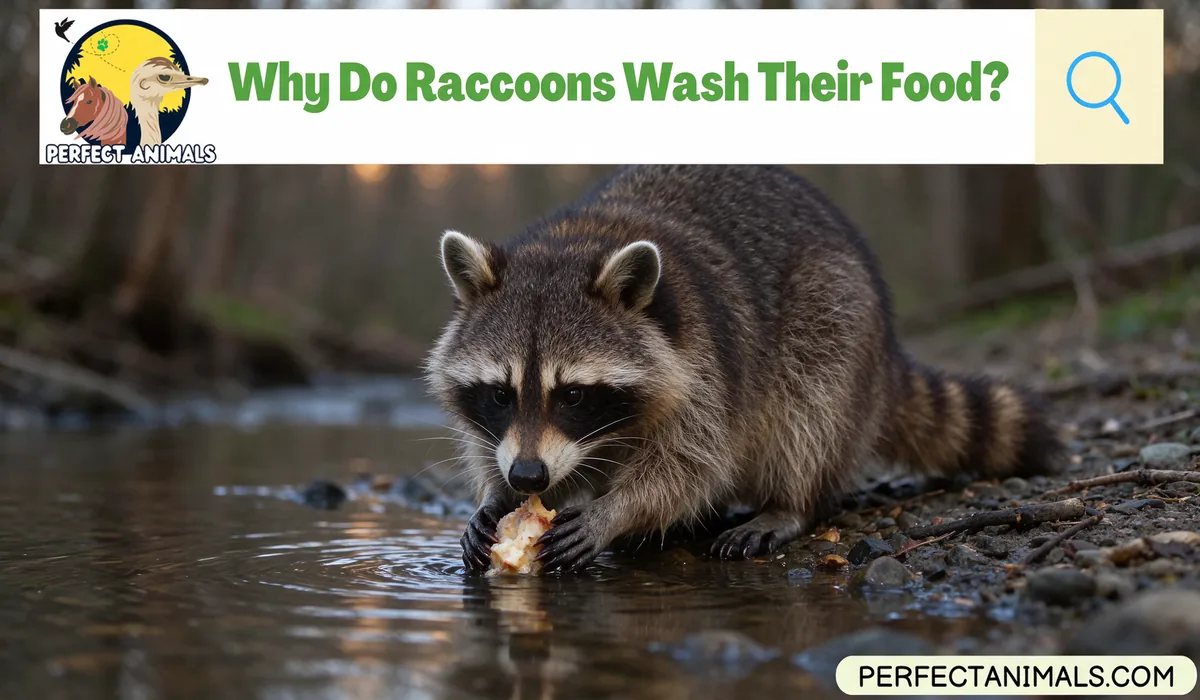
Why do raccoons wash their food? Raccoons are famous for dunking food in water and rubbing it between their front paws. The behavior looks like washing, but raccoons are not carefully cleaning their meals the way a person rinses fruit. Wetting the paws and food helps them gather more information through their extremely sensitive front feet.
This is one of the most recognizable raccoon behaviors in North America. You may see it beside a creek, pond, drainage ditch, birdbath, or even a shallow puddle. Here is what scientists know about the behavior, why water helps a raccoon forage, and what you should do if raccoons are visiting your yard.
Why do raccoons wash their food?
Raccoons dip food in water because moisture improves the sensitivity of the tactile nerves in the hairless parts of their front paws. In simple terms, wet paws help a raccoon feel an object more clearly. That extra information can help it identify what it is holding and decide whether the item is edible.
A raccoon may be checking the food’s texture, shape, size, weight, and firmness. It may also be separating pieces of food or manipulating something difficult to hold. The animal is using its paws almost like a second set of eyes, especially when it is feeding in low light or murky water.
Some dirt may come off as a side effect, but cleaning is not considered the main purpose. The behavior is better described as tactile foraging or food manipulation than ordinary washing.
Do raccoons really wash their food?
Not in the human sense. Raccoons do not dunk every meal because they have decided that it is dirty or unsafe. They often handle food in water because wetting their paws makes touch more useful. If a raccoon happens to remove soil or debris from a food item while doing this, that is a byproduct of the behavior.
The common name “washing bear” has helped spread the cleaning explanation. Raccoons are not bears, but their habit of dipping food has made them seem unusually hygienic. Their scientific name, Procyon lotor, even includes a species name that refers to washing. The name reflects an old observation of the behavior, not proof that raccoons are trying to sanitize their meals.
How do raccoons use their paws?
A raccoon’s front paws are remarkably dexterous. They have five toes and can grasp, rotate, pull, and explore objects. The paws are not covered by thick fur like much of the animal’s body, which allows the raccoon to receive detailed tactile information through its skin and nerves.
Raccoons can use those paws to search underwater for crayfish, frogs, snails, mussels, insects, and other prey. They may feel around under rocks or through mud even when they cannot see clearly. They can also handle fruit, eggs, human garbage, and other foods with surprising precision.
Water changes how the surface of the paw interacts with an object. The added moisture can make the paw’s sensory system more responsive, allowing the raccoon to notice details that would be harder to detect with dry feet. This is especially useful for an animal that often feeds at night.
Why do raccoons dunk food in water at night?
Raccoons are mostly nocturnal, meaning they are often most active after sunset. Their eyesight works, but touch is especially important when they are searching in dark water, leaf litter, or dense vegetation. A raccoon does not need to see every detail of an object if its paws can provide information about it.
That does not mean raccoons can only identify food by touch. Smell, taste, hearing, and vision all contribute to their decisions. Dunking food is one part of a flexible feeding strategy, not a required step before every bite.
Do all raccoons wash their food?
No. Not every raccoon will show the behavior, and an individual may not do it every time it eats. The behavior is easiest to observe when a raccoon has access to shallow water and a food item that can be held and manipulated.
A raccoon eating dry food on land may simply pick it up and chew. A raccoon finding aquatic prey may spend much more time using its paws underwater. Age, experience, food type, weather, habitat, and the availability of water can all affect what you see.
Do raccoons wash food to make it softer?
Moisture can change the texture of some foods, so dunking may sometimes make an item easier to handle. However, the strongest explanation is still improved tactile information. Raccoons are not known to need water to produce saliva or to soften every meal before swallowing.
They have normal salivary glands and can eat many foods without dipping them. The water may help them inspect and manipulate an unfamiliar object, while any change in texture is incidental or secondary.
Why do raccoons put dry food in a birdbath?
A birdbath, pet bowl, or shallow container can become a convenient place for a raccoon to handle food. If the animal is already carrying food through a yard, it may use the nearest available water source. The behavior does not mean the raccoon has learned that the birdbath is a special kitchen.
Birdbaths can also attract wildlife because they provide drinking water during hot or dry weather. If you are trying to discourage raccoons, clean up fallen food, secure garbage, and avoid leaving pet food outdoors overnight. Do not intentionally feed raccoons, because feeding can make them lose their natural caution around people.
Is raccoon food washing a sign of intelligence?
It shows that raccoons have flexible sensory and feeding behaviors, but the word “intelligence” needs care. Raccoons are excellent problem-solvers and can manipulate containers, latches, and other objects. Their front paws, memory, curiosity, and adaptability help them live in forests, wetlands, farms, suburbs, and cities.
Still, dipping food should not be treated as a deliberate hygiene ritual or as proof that a raccoon understands cleanliness the way humans do. It is a natural behavior shaped by anatomy and the demands of foraging.
Do raccoons wash everything they eat?
No. Raccoons eat a very broad diet and do not always have water nearby. They may eat insects, fruits, nuts, eggs, small animals, carrion, fish, crayfish, and food they find around human homes. The way they handle an item depends on its size, texture, location, and how easy it is to manipulate.
You may see a raccoon rinse or dunk one item and ignore another. That variation is normal. A raccoon that eats from a trash can or open compost bin may never bring the food to water at all.
Should you leave food and water out for raccoons?
It is best not to feed wild raccoons. Deliberately offering food can attract several animals to one place, spread disease, create conflicts with neighbors, and encourage raccoons to approach people or pets. It can also make young raccoons depend on an artificial food source.
Providing clean water for wildlife is a personal choice, but water dishes can attract raccoons, skunks, feral cats, and other visitors. Keep any container clean, place it away from doors and pet areas, and remove it if it creates a nuisance. Never try to touch, trap, or hand-feed a wild raccoon.
Are raccoons dangerous around homes?
Raccoons usually avoid people, but they are still wild animals. Give them space, keep dogs on a leash at night, and bring pet food indoors. A raccoon that is cornered, sick, injured, or protecting young may bite or scratch.
If you see a raccoon behaving unusually, such as walking in circles, showing extreme confusion, or remaining active in an exposed area during the day, contact local animal control or a wildlife professional. Do not approach it to test whether it is friendly.
How is this different from other animal behaviors?
Many animals use specialized senses while feeding. For example, squirrels flick their tails to communicate and respond to danger, while opossums can use an involuntary defensive response when they are overwhelmed. These behaviors may look strange to us, but they make sense when viewed as adaptations to the animal’s environment.
Raccoon food dunking is particularly memorable because their hands look so humanlike. The behavior is not a little ritual of table manners. It is a practical way to explore food and the world with sensitive, skillful paws.
Bottom line
Raccoons wash—or more accurately, dunk—their food to improve the sensory information they receive through their front paws. Moisture can help them feel an item’s texture, shape, weight, and other characteristics, making it easier to decide whether and how to eat it. Any cleaning that happens is mostly a side effect.
Sources: Encyclopaedia Britannica: Do Raccoons Wash Their Food?, Animal Diversity Web: Procyon lotor, and National Park Service: Urban wildlife guidance.

John Maloney, a passionate bird enthusiast since his childhood, has cultivated expertise in bird care and habitat conservation. Holding an MS in Wildlife Biology from the University of Florida, John has conducted significant research on endangered bird species and their ecosystems.