Why Do Opossums Play Dead? The Truth About Playing Possum
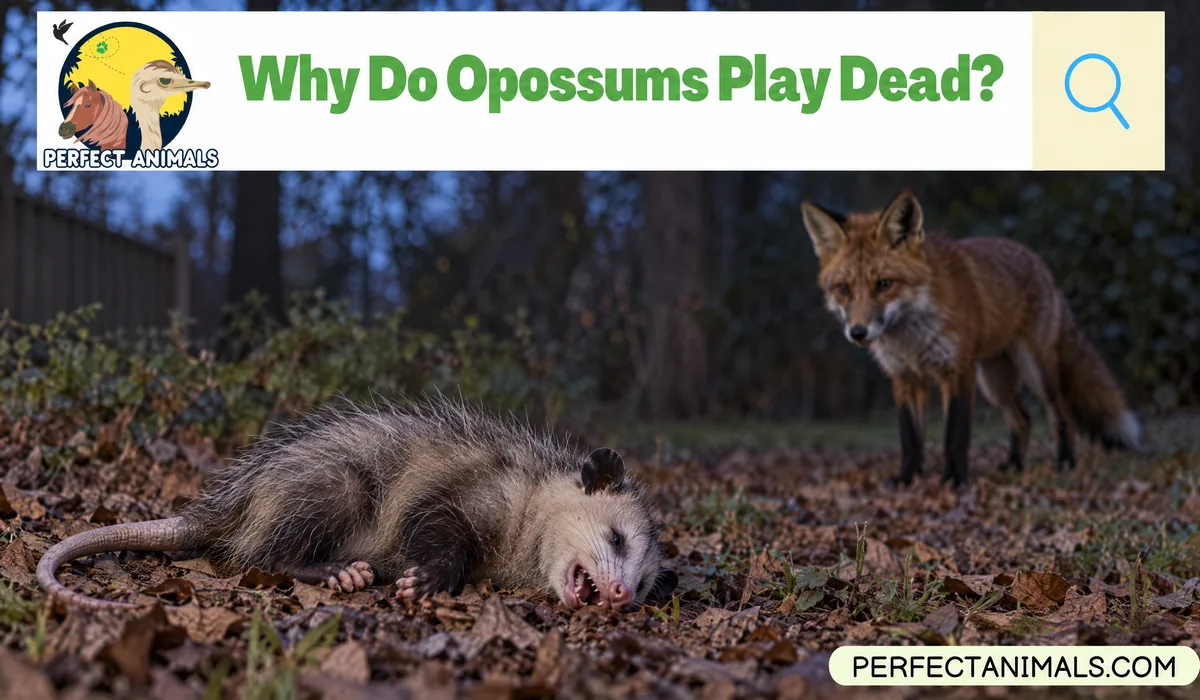
Why do opossums play dead? When a Virginia opossum feels extremely threatened, it can collapse into an involuntary defensive state that makes it look dead. The behavior is commonly called “playing possum,†but the opossum is not pretending on purpose or calmly choosing to fool a predator.
This strange response is one reason opossums are so misunderstood. They may hiss, growl, bare their teeth, or try to escape first. If the threat continues and the animal cannot get away, its body can suddenly become still, with slowed breathing and a limp posture. Here is what that behavior means and what you should do if you see it in a U.S. backyard.
What does it mean when an opossum plays dead?
Playing dead is a last-resort defense response. Wildlife educators often use the scientific term thanatosis for this kind of immobility. A frightened Virginia opossum may roll onto its side, stiffen or relax its body, drool, bare its teeth, and release a strong-smelling secretion from its anal glands.
The combination can make the animal less attractive to a predator that prefers live prey. A predator may lose interest, move away, or decide that the apparently dead animal is not worth investigating. The opossum is buying time without having to win a physical fight.
Do opossums choose to play dead?
No. The response is generally involuntary. A person may say that an opossum “decided†to play dead, but the animal is not putting on a performance in the human sense. Intense fear can trigger a physiological shutdown that the opossum cannot simply stop on command.
That is why an opossum may remain motionless even after the person, dog, or predator that frightened it has left. Its body needs time to return to normal. The exact duration varies, but wildlife sources describe the state as lasting from several minutes to a few hours.
Why does playing dead help an opossum survive?
Opossums are not built to overpower large predators. They are relatively slow on the ground and spend much of their active time searching for insects, fruit, small animals, carrion, and other foods. A dramatic bluff may sometimes work, but a predator that continues approaching can still be dangerous.
A motionless body can change the predator’s decision. Some predators are stimulated by movement and chase, while a still animal may seem less urgent. The smell and appearance of a dead opossum may also discourage a predator from making a meal of it.
This is not a guaranteed trick. Playing dead does not make an opossum invulnerable, and the response can fail if a predator is determined or if a person handles the animal.
What does an opossum look like when it is playing dead?
An opossum in this state may look alarming. Common signs include:
- lying on its side or back and remaining still;
- limp-looking legs and a slack posture;
- partly open mouth with visible teeth;
- drooling or foaming around the mouth;
- slow or shallow-looking breathing;
- a foul odor from the anal glands; and
- little or no response to nearby movement.
Those signs do not prove that every motionless opossum is playing dead. The animal could be injured, ill, or actually dead. Avoid touching it and contact local animal control or a licensed wildlife rehabilitator if you are concerned.
How long do opossums play dead?
There is no single set amount of time. A frightened opossum may recover after a few minutes, while another may remain in the catatonic-like state for much longer. The animal usually moves away after the perceived danger has passed and its body has recovered.
Do not stand over it, poke it with a stick, move it, or repeatedly approach it to see whether it is awake. Those actions can prolong the stress and may cause an injured animal to bite or scratch when it finally reacts.
Do baby opossums play dead more often?
Young opossums may be more likely to rely on this response than older animals, according to wildlife education sources. An adult opossum may also hiss, show its teeth, climb, swim, or run away rather than become immobile.
If you find a small opossum alone, do not automatically assume that it needs to be rescued. Opossums are marsupials, and young animals can be away from their mother while exploring. A wildlife rehabilitator can help determine whether intervention is needed.
Do opossums play dead around people?
They can, especially if a person corners them, blocks their escape, or allows a dog to chase them. An opossum that is hissing or showing its teeth is frightened and asking for distance. Give it a clear path to leave instead of trying to photograph it from close range.
Most opossums want to avoid people. If one is under a deck, near a shed, or passing through a yard at night, keep pets indoors and remove easy food sources such as unsecured garbage or fallen pet food. Never try to catch a wild opossum with your hands.
Should you touch an opossum that looks dead?
No. Treat an apparently dead or motionless wild animal as potentially alive and capable of defending itself. Keep children and pets away, leave the animal undisturbed, and call a local wildlife rehabilitator or animal-control office for advice.
If the animal is in immediate danger from traffic, construction, or a pet, explain the situation to the professional before moving anything. Do not pour water on the opossum, drag it by the tail, or place it in a box without guidance.
Are opossums dangerous?
Opossums can bite when frightened, but they generally prefer escape or avoidance. Their hissing and tooth display can look aggressive even when the animal is trying to discourage contact. Like any wild mammal, an opossum should be observed from a safe distance.
Opossums are also useful members of many U.S. ecosystems. They consume a wide variety of foods, clean up carrion, and may eat insects and other small animals. Their unusual defense response is not a reason to persecute them.
Is “playing possum†the same as fainting?
The phrase “playing possum†is informal, and the response is not identical to a human fainting spell. It is better understood as a stress-triggered defensive immobility response. The animal is not necessarily unconscious in the same way a person is after fainting, and it should not be treated as if it were safely asleep.
Other animals can show forms of thanatosis too, including some snakes, birds, insects, and spiders. The details differ by species, but the general idea is similar: becoming still can sometimes reduce the chance of being attacked.
Bottom line
Opossums play dead because extreme fear can trigger an involuntary defense response called thanatosis. The still body, open mouth, odor, and slowed breathing may make a predator lose interest. If you see one, give it space, keep pets away, and ask a wildlife professional for help rather than touching it.
Sources: National Park Service: Virginia opossum, University of Maryland Extension: The Misunderstood Opossum, Animal Diversity Web: Didelphis virginiana, and Forest Preserve District of Will County: why opossums play dead.

John Maloney, a passionate bird enthusiast since his childhood, has cultivated expertise in bird care and habitat conservation. Holding an MS in Wildlife Biology from the University of Florida, John has conducted significant research on endangered bird species and their ecosystems.