Why Do Squirrels Flick Their Tails? Communication, Danger, and More
Why do squirrels flick their tails? Most often, a squirrel flicks or shakes its tail when it is alert, irritated, threatened, or communicating with another squirrel. The movement can draw attention to danger, warn a rival to keep away, or show that the animal has noticed something unusual.
A tail flick is not a perfect translation of one squirrel sentence. The same bushy tail can also help with balance, warmth, and camouflage. To understand the message, watch the tail together with the squirrel’s posture, sounds, location, and what happened immediately before the movement.
What does it mean when a squirrel shakes its tail?
In a North American backyard, a rapid tail flick often means the squirrel is on alert. It may have spotted a hawk, cat, dog, person, or competing squirrel. The animal may freeze, chatter, stamp its feet, or move toward cover at the same time.
Tree squirrels use visual signals and vocalizations together. Animal Diversity Web notes that eastern gray squirrels communicate through vocalizations and postures, including tail flicking. A squirrel that is staring toward a threat while flicking its tail is probably not performing randomly; it is responding to something in its surroundings.
Do squirrels flick their tails to warn other squirrels?
They can. A visible tail movement may help alert nearby squirrels that a predator or rival is present. It may also tell another squirrel that the signaling animal is ready to defend food, a nesting area, or personal space.
That does not mean every squirrel tail movement is a formal alarm call. Squirrels live in noisy, changing environments, and their body language is flexible. A tail flick can be directed toward another squirrel, toward a predator, or simply reflect the animal’s own agitation.
Why do squirrels flick their tails at hawks?
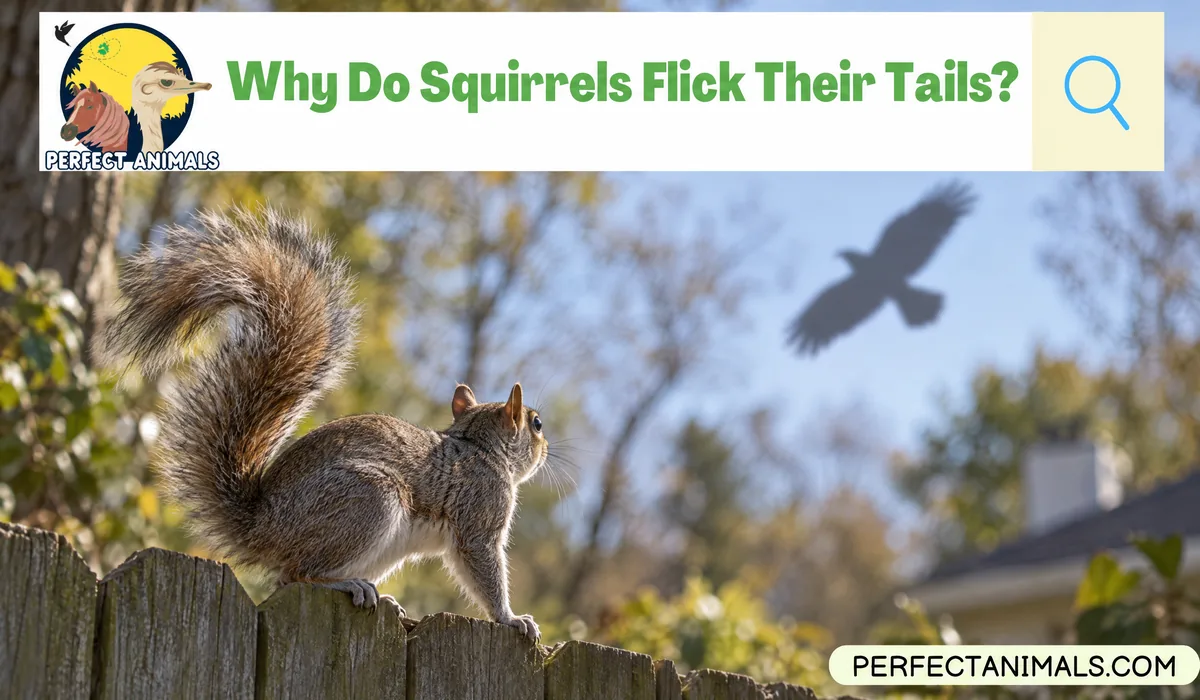
A hawk is one of the most serious dangers a squirrel may face in an open yard. When a squirrel notices a bird of prey, it may press its body low, run toward a tree, bark or chatter, and flick its tail. The contrasting tail movement may make the squirrel more noticeable to the predator while also signaling that the squirrel has seen it.
Researchers have found that squirrel tail displays can communicate more than simple fear. In a University of California, Berkeley study of fox squirrels, tail flicking increased when the animals became frustrated while trying to reach a nut in a difficult container. That finding is a useful reminder that tail movement can reflect emotional arousal and problem-solving frustration as well as predator awareness.
Why does a squirrel flick its tail at people?
A squirrel may flick its tail at you because you startled it, approached its food, blocked its escape route, or entered a space it was using. It is not necessarily “waving hello.†The animal may be telling you that it has noticed you and wants more distance.
If a squirrel keeps flicking its tail while facing you, step back and give it an unobstructed route to a tree or other cover. Do not chase it, corner it, or try to touch it. Wild squirrels can bite when frightened, and feeding them can make them more confident around people.
Do squirrels flick their tails when angry?
Sometimes a tail flick is associated with irritation or defensive behavior. A squirrel guarding a bird feeder, nut cache, nest tree, or young may flick its tail and make chattering or barking sounds. It may also flatten its body, raise its tail, stamp its feet, or move toward another squirrel.
These signs do not mean that the squirrel is looking for a fight. They usually mean that the animal is trying to communicate before a physical confrontation becomes necessary. Removing yourself from the situation is the safest response.
Why do squirrels wave their tails while running?
A running squirrel may use its tail as a visual signal, but the tail is also important for movement. Its large surface helps the animal balance while it climbs, jumps between branches, and changes direction quickly. A flick during a sprint may be part alarm display and part ordinary body control.
The tail can also help a squirrel stay warm in cold weather. When the animal curls up, it can use the tail like a blanket. In summer, the tail may help shade the body. These jobs explain why squirrels continue to use their tails even when no other animal is nearby.
Is a squirrel tail flick the same as a squirrel tail wag?
People use “flick,†“twitch,†“shake,†and “wag†interchangeably, but the movement can vary. A short twitch may happen when a squirrel is watching a new object. A repeated shake paired with chattering is more likely to signal agitation or alertness. A tail held high can make the squirrel look larger and more visible to another animal.
There is no universal dictionary that lets people decode every movement with certainty. Look for patterns: what is the squirrel watching, is another squirrel nearby, are there alarm sounds, and does the animal retreat or approach?
What else do squirrels use their tails for?
- Balance: the tail acts as a counterweight during climbing and jumping.
- Communication: flicking, raising, or shaking the tail can signal alertness, irritation, or territorial behavior.
- Warmth: a squirrel can wrap its tail around its body during cold weather.
- Distraction: movement and tail shape may complicate a predator’s attack on a small animal.
- Camouflage: the tail can break up the squirrel’s outline among branches and leaves.
Do baby squirrels flick their tails?
Young squirrels develop coordination and communication gradually. A juvenile may make awkward or exaggerated movements while learning to climb, balance, and respond to danger. If you find a young squirrel on the ground, do not assume that it is abandoned just because it is alone; the mother may be nearby.
Keep pets indoors and observe from a distance. If the squirrel is visibly injured, cold, or in immediate danger, contact a licensed wildlife rehabilitator rather than attempting to raise it yourself.
How should you respond to a squirrel that keeps flicking its tail?
Give the squirrel space. Move slowly, avoid staring it down, and do not block the nearest tree, fence, or shrub. If the squirrel is repeatedly coming to a feeder, reduce accessible food and secure bird feeders instead of trying to catch or punish the animal.
For more wildlife context, read our guides to what bobcats eat, where bobcats live, and whether foxes are nocturnal. Different species use different signals, so squirrel body language should not automatically be applied to every backyard animal.
Bottom line
Squirrels flick their tails to communicate alertness, irritation, territorial boundaries, and sometimes danger. The movement can also appear when a squirrel is frustrated or focused on a difficult task. A tail flick is most meaningful when you interpret it with the animal’s posture, vocalizations, surroundings, and recent events.
Sources: Animal Diversity Web: eastern gray squirrel, UC Berkeley: fox squirrels’ tail signs of frustration, and Birds & Blooms: why squirrels shake their tails.

John Maloney, a passionate bird enthusiast since his childhood, has cultivated expertise in bird care and habitat conservation. Holding an MS in Wildlife Biology from the University of Florida, John has conducted significant research on endangered bird species and their ecosystems.