Do Sea Otters Hold Hands While Sleeping? What Rafting Really Means
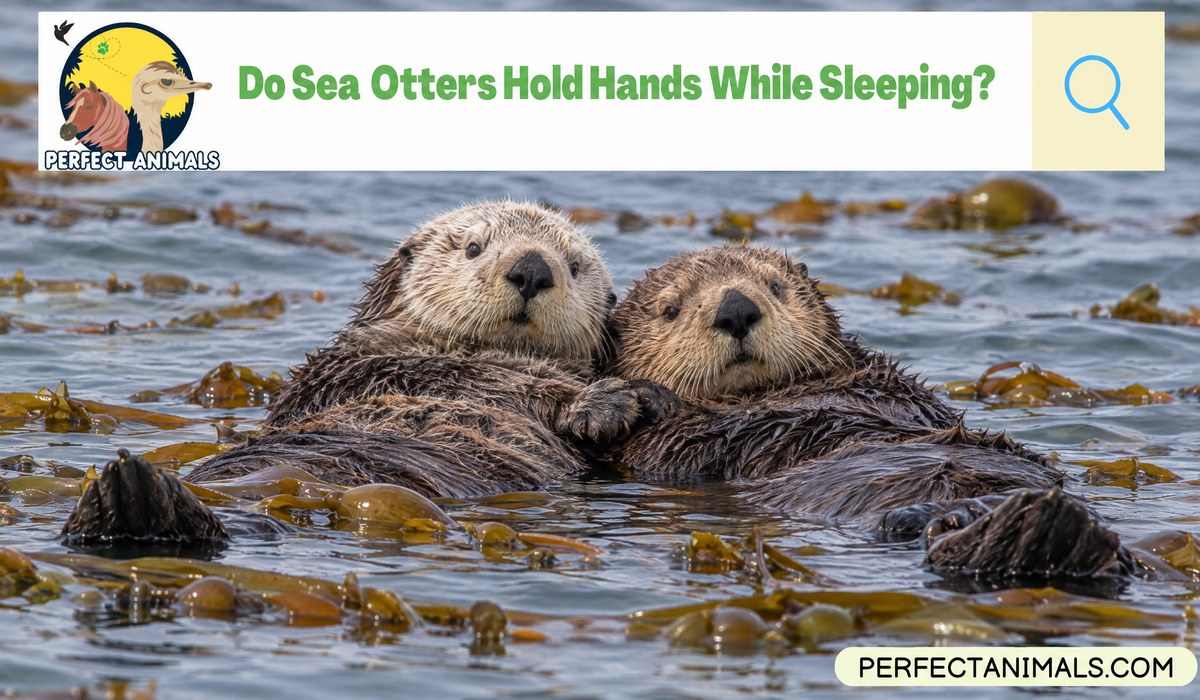
Do sea otters hold hands while sleeping? Sometimes sea otters have been observed touching or holding paws, but the viral claim is too simple. Paw-holding is not a routine behavior that every wild sea otter uses to make sure it never drifts away.
Wild sea otters more commonly rest in groups called rafts, float close together, and use kelp or seagrass to help keep from drifting. A careful answer is more interesting than the popular meme: paw-holding can happen, but it should not be presented as the normal sleeping strategy of the species.
Why do people say sea otters hold hands?
Sea otters sleep on their backs, and photographs of two otters touching paws are memorable. The images spread widely because the behavior looks affectionate and easy to explain. But a striking photograph does not tell us how common the behavior is or why it happened in that moment.
Sea Otter Savvy describes wild paw-holding as very rare based on experienced field observations. That makes it important to separate an observed behavior from a universal rule about the species.
What is a sea-otter raft?
A raft is a group of sea otters resting together at the surface. Sea otters may gather in groups while sleeping or resting, which can reduce separation and provide social contact. The animals can also wrap themselves in kelp or seagrass. The U.S. Fish and Wildlife Service identifies kelp and seagrass as important ways sea otters rest without drifting far.
Rafting is therefore a better-supported explanation for the common sight of sea otters resting together than the claim that they routinely hold paws. Some individuals may touch, but group resting and anchoring vegetation are the behaviors to emphasize.
Do sea otters hold hands in the wild?
There are reports and observations of paw contact, but available specialist commentary does not support describing it as a normal, frequent wild behavior. It may be more familiar from captive settings, where animals live in a controlled environment and observers can watch them closely.
When writing about animal behavior, words such as “always,†“so they never drift apart,†and “mates for life†need special care. They turn a limited observation into a species-wide claim. The evidence supports a narrower statement: sea otters sometimes touch paws, while wild otters more reliably rest in rafts or use kelp and seagrass.
Do sea otters hold hands because they are mates?
There is no good reason to describe every pair of resting sea otters as lifelong mates. Sea otter social behavior, mating, and pup care are more complicated than the popular story suggests. A paw-holding photograph cannot establish a romantic relationship or a permanent pair bond.
It is also important not to confuse human affection with animal behavior. Sea otters are social mammals, but scientific explanations should focus on observations and ecology rather than assuming that a familiar human emotion is the cause.
How do sea otters keep from drifting?
- They may rest close together in a raft.
- They may wrap themselves in kelp or seagrass.
- They can remain alert to waves, currents, and nearby animals.
- They may occasionally touch or hold paws, but this is not the main explanation for how wild otters rest.
Sea otters also spend much of their time grooming, feeding, and maintaining their dense fur. Resting safely matters because they live in cold water and use a great deal of energy.
Related sea-otter questions
For a broader introduction, see our existing guide to whether sea otters are friendly. Remember that “friendly†is not the same as safe to approach: wild sea otters are protected wildlife and should be watched from a respectful distance.
Bottom line
Sea otters may sometimes hold or touch paws, but routine hand-holding is not the best-supported explanation for how wild sea otters sleep. Rafting and wrapping in kelp or seagrass are more dependable parts of the natural-history story. The cutest version of the claim is not necessarily the most accurate one.
Sources: Sea Otter Savvy: Sea Otter Paw Holding—A Reality Check, U.S. Fish & Wildlife Service: Southern sea otter, and SeaWorld: otter behavior.
Jamie has a rich understanding of marine life, garnered through extensive study and hands-on experience with various marine organisms. He has actively participated in marine education programs, broadening public understanding of the ocean’s intricate ecosystems.