Why Do Dogs Lick Their Paws? What’s Normal and When to Worry
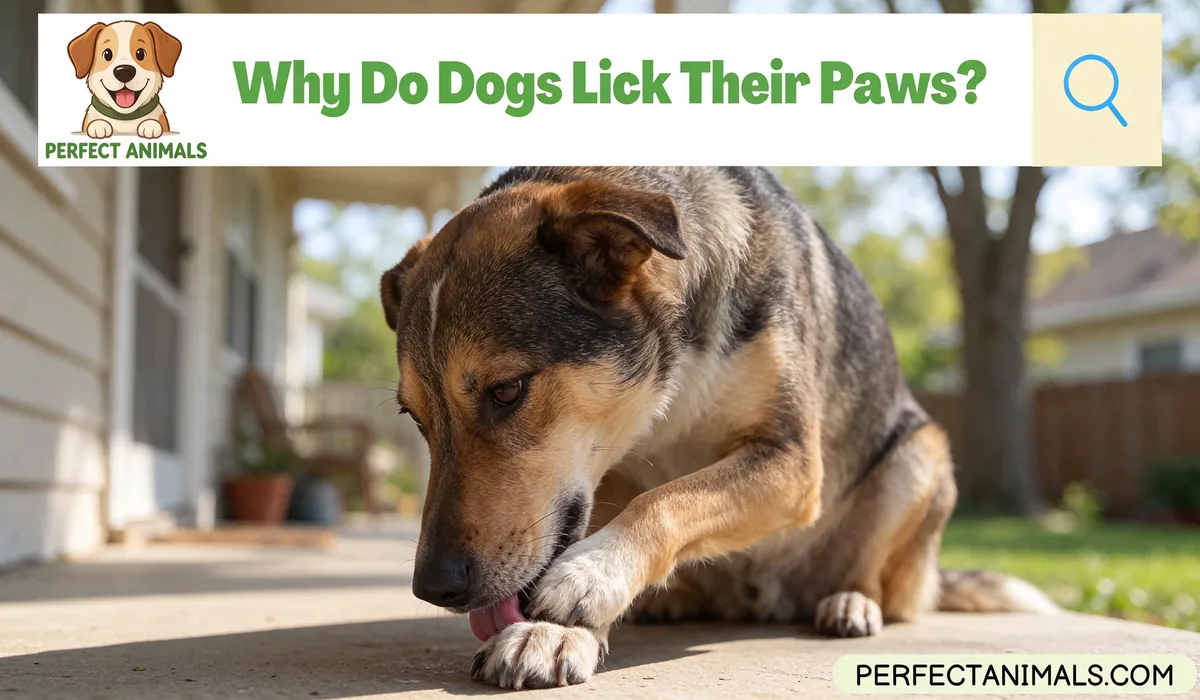
If you have ever looked over and seen your dog quietly licking a paw, you may have wondered, “Why do dogs lick their paws?” In many cases, a little paw licking is normal grooming or a way to settle down. But frequent, intense, or focused licking can also be a clue that something is irritating, hurting, or worrying your dog.
The important distinction is not whether your dog ever licks a paw. It is whether the behavior is occasional and harmless or persistent enough to change the skin, interrupt daily life, or resist distraction.
Why do dogs lick their paws sometimes?
Dogs may lick their paws for ordinary reasons. They might be cleaning dirt from between their toes after a walk, investigating an interesting smell, or soothing themselves before a nap. PetMD describes occasional licking as a common behavior related to exploration, self-soothing, or cleaning.
A dog that licks briefly and then returns to normal activities—with no redness, swelling, odor, limp, or damaged skin—may simply be grooming. Still, watch for a change from your dog’s normal pattern. A new habit that becomes more frequent deserves attention.
Common reasons a dog keeps licking their paws
1. Something is irritating the paw
Grass seeds, small stones, splinters, burrs, rough surfaces, and other foreign objects can irritate the skin between the toes or around the paw pads. A sudden focus on one paw is especially useful information. Cuts, stings, broken nails, cracked pads, and burns from hot pavement or cold-weather chemicals can also cause pain and licking.
Look from a safe distance for obvious changes, but do not dig into the paw or try to remove a deeply embedded object yourself. A veterinarian can examine the area without turning a small problem into a larger injury.
2. Allergies or itchy skin
Environmental triggers such as pollen or grass, flea reactions, food allergies, and household irritants can make a dog’s feet itchy. In the United States, seasonal changes may make licking appear at particular times of year, but timing alone cannot identify the cause.
Allergy-related licking often affects more than one paw and may occur alongside itchy skin, ear problems, redness, or recurrent hot spots. Your veterinarian can help separate allergies from parasites, infection, and other conditions rather than guessing from a single symptom.
3. A yeast or bacterial skin infection
Repeated licking keeps the skin damp and can damage its protective barrier. That creates an opportunity for secondary yeast or bacterial overgrowth, which may increase itching and create a frustrating lick-and-itch cycle. A strong odor, redness, swelling, discharge, thickened skin, or brown saliva staining is a reason to arrange a veterinary examination.
4. Pain somewhere else in the body
Dogs sometimes lick as a response to discomfort that is not limited to the paw. Joint pain, a sore nail, or another painful area may lead to repeated grooming. Limping, reluctance to climb stairs, reduced activity, or a sudden change in mood makes pain more concerning.
5. Stress, boredom, or a learned habit
Licking can be calming for some dogs. If medical causes have been addressed, a dog may continue the behavior because it became a habit or because boredom, anxiety, or another stressor is present. Behavioral explanations should not be used to dismiss a physical problem: chronic licking can injure the skin even when it began as self-soothing.
When is paw licking a reason to call the vet?
Contact your veterinarian if your dog licks or chews a paw frequently, intensely, or obsessively; cannot be distracted; or is causing a wound. Chewy’s veterinary-reviewed guidance also lists swelling, broken nails, hot spots, blisters, growths, strong odor, brown staining, and limping as warning signs.
Seek prompt veterinary advice for a painful-looking paw, significant swelling, bleeding, discharge, a suspected burn, a lodged object, or sudden severe licking after a sting. Facial swelling, trouble breathing, collapse, or other signs of a serious allergic reaction need emergency care.
What can you do while you arrange advice?
- Note whether one paw or several are affected and when the licking started.
- After walks, gently rinse or wipe visible dirt from the paws and dry them well.
- Check for obvious redness, swelling, broken nails, or a surface injury without forcing your dog to tolerate handling.
- Prevent repeated self-trauma with veterinary guidance; a cone or other barrier may be appropriate in some cases.
- Do not give human pain medicine or apply creams unless your veterinarian specifically recommends the product and dose.
Keep track of changes in weather, walking surfaces, food, flea prevention, detergents, and other exposures. That history can help your veterinarian look for patterns.
The bottom line
So, why do dogs lick their paws? Sometimes they are simply grooming or calming themselves. Persistent licking, especially when it is focused on one paw or accompanied by redness, odor, swelling, wounds, or limping, is more than a quirky habit until a veterinarian has checked for irritation, allergies, infection, pain, or stress.
For more explanations of everyday dog behavior, read why dogs shake off when they are not wet, what a dog’s sigh can mean, and why dogs circle before lying down. For the medical guidance in this article, see PetMD’s veterinary-reviewed overview and Chewy’s veterinary-reviewed explanation.

John Maloney, a passionate bird enthusiast since his childhood, has cultivated expertise in bird care and habitat conservation. Holding an MS in Wildlife Biology from the University of Florida, John has conducted significant research on endangered bird species and their ecosystems.