Why Do Birds Take Dust Baths? The Science Behind This Strange Behavior
If you have seen a sparrow flop into a patch of dry soil and flick dust through its feathers, you may have wondered, “Why do birds take dust baths?” It may look like the bird is making itself dirty, but dust bathing is a normal form of feather care. Many birds use dry soil as part of their grooming routine.
Birds still preen and use water when it is available. A dust bath serves a different purpose: it helps work fine particles through the plumage before the bird shakes and preens them away.
Why do birds take dust baths?
Dust bathing can help birds maintain their feathers by absorbing excess oil and loosening debris. Audubon explains that birds often hollow out a shallow depression in dry soil, flap and wallow in the dust, and then preen the particles out of their feathers. The routine may remove grease, feather debris, and possibly some tiny external parasites.
Birds depend on orderly feathers for insulation, protection, and flight. Regular preening aligns the feather barbs and removes some dirt. Dusting adds another cleaning method that is especially useful when a bird needs to reduce oil or debris without soaking its plumage.
How does a bird take a dust bath?
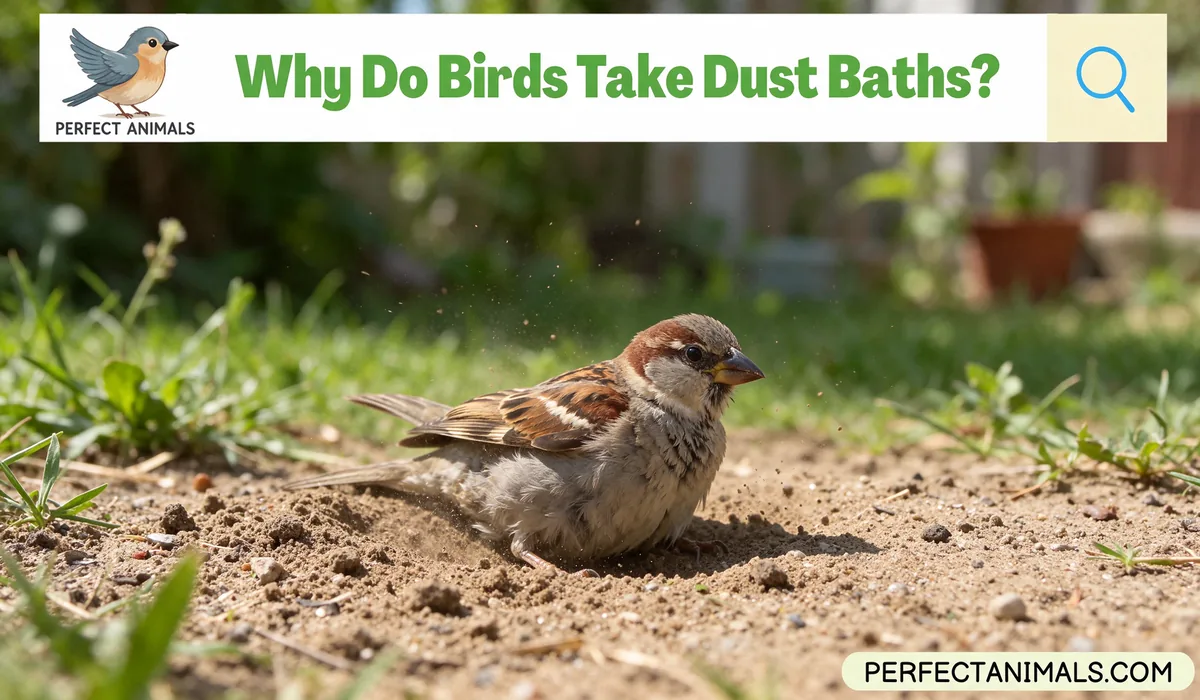
A typical dust bath begins with a bird choosing a patch of fine, dry soil. It may scrape a shallow hollow with its feet, settle its belly into the depression, and kick or flick dirt up into its feathers. The bird may shimmy, roll, flap one wing, or rub its head and neck into the soil.
After several seconds or minutes, the bird shakes off the loose dust and returns to preening. House Sparrows can be especially enthusiastic dust bathers, but the behavior is not limited to one species. Doves, quail, and other birds may use similar patches in yards, parks, or open woodland.
Does dust bathing kill parasites?
Dust bathing may help dislodge or smother some external parasites, but it is not accurate to say that dust baths eliminate every parasite. Audubon describes parasite removal as a possibility, while the better-supported general explanation is that dust helps remove oil and feather debris as it is preened away.
BirdNote reports that experiments found oil buildup on Northern Bobwhite feathers when the birds could not access dirt. It also describes less dandruff after Japanese Quail dust-bathed for about two weeks. These findings support dust bathing as useful plumage maintenance, but they do not turn every backyard dust bath into a medical treatment.
Why do birds dust bathe when water is nearby?
Water and dust baths are not necessarily competing choices. Water can loosen surface dirt and help a bird rinse its feathers. Dust can absorb oil and work into the plumage before being shaken and preened away. A bird may use both methods depending on its species, the weather, and the condition of its feathers.
BirdNote notes that birds may dust bathe alone, in pairs, or in groups, and that the behavior is especially common during summer. A sunny, dry patch may simply be the most useful grooming site at that moment.
Which backyard birds take dust baths?
In the United States, House Sparrows are familiar dust bathers in urban and suburban areas. Mourning Doves, quail, and other ground-feeding birds may also use fine soil. The exact behavior varies by species, and not every bird that visits a yard will dust bathe in view of people.
Look for a shallow hollow in a dry, loose patch of earth, scattered soil around the edges, and a bird that repeatedly fluffs, rolls, or flicks its wings. Dust may briefly hang in the air before the bird moves to a nearby perch for preening.
How can you provide a safe dust-bathing area?
If you want to make your yard more useful to birds, leave a small area of clean, dry, chemical-free soil available. A shallow patch sheltered from heavy rain may stay usable longer than compacted lawn. Keep it away from places where pets regularly roam, and avoid soil that has been treated with pesticides, herbicides, fertilizers, or other chemicals.
Do not add powders, fragrances, pesticides, or household products to a bird’s dusting area. Birds can ingest particles while preening, so the safest approach is a natural patch of clean soil. Provide fresh drinking and bathing water separately, and clean birdbaths regularly.
Is a bird dust bathing sick or distressed?
Usually, no. A bird that dust bathes, shakes off, and then flies or walks normally is displaying ordinary grooming behavior. Fluffed feathers can mean different things in different situations, so one brief dust bath should not be treated as a sign of illness.
Concern is more appropriate when a bird remains lethargic, cannot fly, has an obvious injury, struggles to breathe, or shows unusual behavior unrelated to bathing. Do not handle a wild bird simply because it took a dust bath. Contact a licensed wildlife rehabilitator if a bird appears injured or truly helpless.
The bottom line
Why do birds take dust baths? They use dry soil to help care for their feathers. Dusting can loosen debris and absorb some excess oil before the bird shakes and preens the particles away. It is a normal behavior seen in many birds, including familiar U.S. backyard visitors such as House Sparrows, doves, and quail.
For more bird behavior explanations, read why birds fluff up their feathers and why pigeons bob their heads when they walk. For the natural-history evidence behind this article, see Audubon’s explanation of bird feather care and BirdNote’s account of the value of dust baths.

John Maloney, a passionate bird enthusiast since his childhood, has cultivated expertise in bird care and habitat conservation. Holding an MS in Wildlife Biology from the University of Florida, John has conducted significant research on endangered bird species and their ecosystems.