Why Do Birds Fluff Up Their Feathers? What It Means
If you have watched a chickadee, cardinal, sparrow, or another bird at a feeder, you may have noticed it suddenly look twice as round. Why do birds fluff up their feathers? Most of the time, the answer is simple: fluffing helps a bird hold onto body heat. Birds may also puff up briefly while resting, preening, or settling in for the night.
However, a bird that stays fluffed up and sleepy during the day can be a different matter—especially if it is a pet bird. Here is what feather fluffing means in common situations, how it helps wild birds survive cold weather, and which warning signs deserve prompt veterinary attention.
Why do birds fluff up their feathers in cold weather?
Birds fluff their feathers to create a layer of still air around their bodies. When the feathers lift away from the skin, many small air pockets form between the plumage. That trapped air acts as insulation, slowing the loss of heat from the bird’s body.
The effect is similar to wearing a thicker coat. Downy feathers beneath the outer feathers are especially useful for holding warm air close to the skin, while the outer plumage helps protect the bird from wind and moisture. The National Audubon Society explains that feather fluffing creates hundreds of air pockets that increase a bird’s natural insulation.
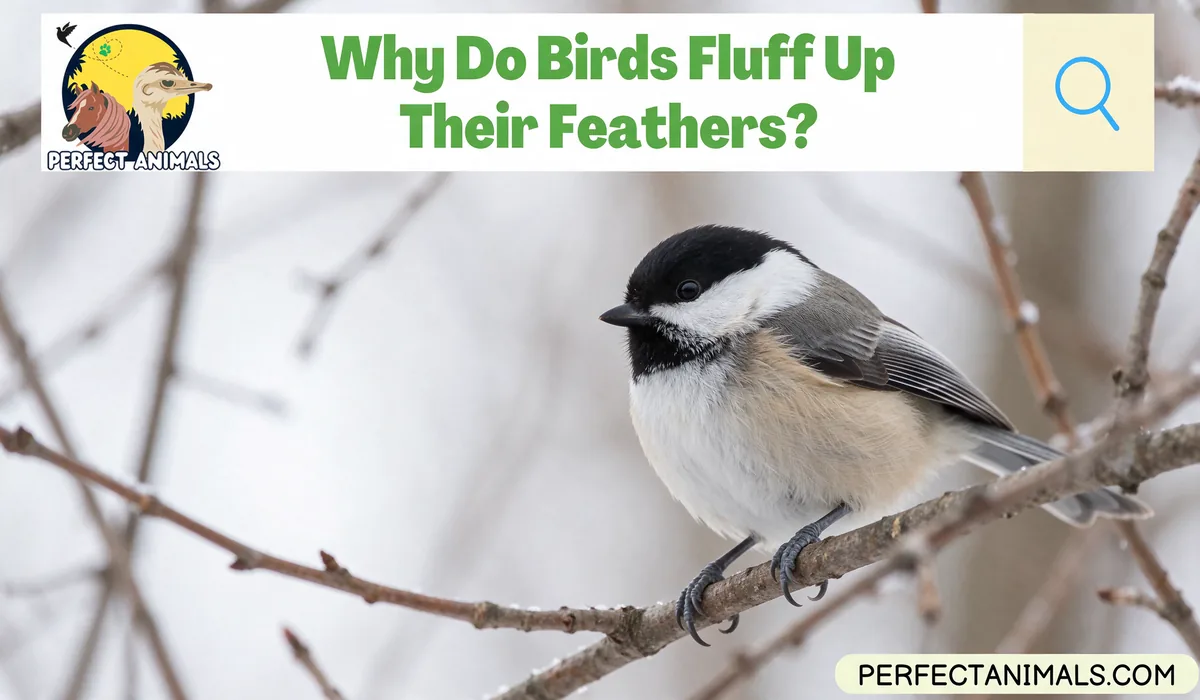
That is why backyard birds often look rounder on a cold morning. A black-capped chickadee or northern cardinal is not necessarily gaining weight; it is temporarily changing the arrangement of its feathers to conserve energy.
Do birds fluff up only in winter?
No. Cold weather is one of the most familiar reasons, but it is not the only one. A healthy bird may puff its feathers for a short time while it rests, preens, relaxes, or prepares to sleep. A bird that has just finished moving around may also adjust its plumage as its body temperature changes.
Context matters. Brief fluffing followed by normal activity, alert eyes, regular feeding, and ordinary movement is usually less concerning than a bird that remains puffed up for hours. Wild birds may also fluff when they pause in a sheltered spot, particularly when wind or rain makes it harder to retain heat.
How does feather fluffing help birds survive winter?
Fluffing is only one part of a bird’s winter strategy. Many species also seek dense shrubs, tree cavities, evergreen cover, or other places that block wind. Some birds huddle together, while others conserve energy by reducing activity or changing how they use their body heat.
The Cornell Lab of Ornithology notes that black-capped chickadees may shelter in tree cavities at night and puff up their feathers to create an insulated coat. Cornell also describes other species-specific adaptations, including food caching and regulated hypothermia. These examples are a reminder that not every bird handles winter in exactly the same way.
Food is important because staying warm requires energy. Birds may visit feeders more often, eat high-energy foods, or rely on food they stored earlier. In a U.S. backyard, providing clean water that has not frozen and maintaining a safe, hygienic feeder can help birds find resources, but feeding is not a substitute for natural habitat. Dense native shrubs, mature trees, and safe shelter can be valuable throughout the year.
Why do birds fluff up before sleeping?
Many birds become fluffier when they settle down to rest. Loosening the feathers helps retain warmth during a period when the bird is inactive. At night, a bird cannot spend as much time foraging to replace heat loss, so insulation and shelter become especially important.
A resting bird should still look reasonably alert when it wakes and should return to normal behavior at appropriate times. For a wild bird, avoid approaching closely just because it looks puffy. Watching from a distance is safer and gives the bird less reason to abandon a sheltered resting place.
When can a fluffed-up pet bird be a sign of illness?
Pet birds sometimes fluff briefly while resting, but persistent daytime fluffing deserves attention. Birds are good at hiding illness, so a bird that stays puffed up, sleeps more than usual, sits quietly, or stops acting normally may need an avian veterinarian.
Contact a veterinarian promptly if fluffing occurs with reduced appetite, changes in droppings, unusual weakness, half-closed eyes, or a noticeable change in behavior. Seek urgent care if the bird is sitting on the cage floor, breathing with an open mouth, bobbing its tail with each breath, bleeding, or refusing food and water. These signs can indicate a serious problem and should not be diagnosed from an article or treated with human medication.
Until professional advice is available, keep a sick-looking bird quiet and away from drafts, handle it as little as possible, and remove exposure to fumes. Overheated nonstick cookware, smoke, aerosol sprays, and other airborne irritants can be dangerous for birds. Do not place a heat source directly against a cage unless an avian veterinarian has told you how to do it safely.
What should you do if a wild bird looks fluffed up?
First, consider the setting. A bird perched in a cold breeze may simply be conserving heat. Give it space and look for normal signs such as alertness, coordinated movement, and the ability to fly. Do not handle a wild bird unless a licensed wildlife rehabilitator or animal-control professional has instructed you to do so.
If a wild bird cannot fly, is lying on the ground, has an obvious injury, is being threatened by pets, or remains unresponsive, contact a licensed wildlife rehabilitator in your area. Keep cats indoors and dogs leashed near the bird, and avoid offering food or water unless a wildlife professional provides specific instructions.
Bottom line: what does it mean when a bird fluffs its feathers?
Usually, a bird fluffs up to trap warm air and conserve body heat. It may also puff up briefly while resting or sleeping. The behavior is normal in many everyday situations, especially during cold weather.
The important distinction is duration and context. A wild bird that puffs up briefly and remains active is often using a normal survival strategy. A pet bird that stays fluffed up and sleepy during the day, or shows breathing, appetite, droppings, or balance changes, needs prompt advice from an avian veterinarian.
For more bird behavior, you can also read our guides to why cats chirp at birds, birds with red heads, and what to do when a bird hits a window.
Sources
- National Audubon Society: How Do Birds Cope With Cold Winter Weather?
- Cornell Lab of Ornithology: How Do Song Birds Survive Winter?
- ExoCare Veterinary Medical Centre: My Bird Is Fluffed Up—When Should You See a Vet?

John Maloney, a passionate bird enthusiast since his childhood, has cultivated expertise in bird care and habitat conservation. Holding an MS in Wildlife Biology from the University of Florida, John has conducted significant research on endangered bird species and their ecosystems.